

20 April 2026 · Updated 15 June 2026 · By Amanda Conroy
Insight
Noosa Hinterland Buyers Agent: A Forensic Acquisition Guide
By Amanda Conroy, Founder, Vendee Property Buyers
Introduction: The Search Fatigue Trap
Last year, a couple spent twelve months searching for their ideal Hinterland acreage. They were sophisticated investors, well-read on property investment and market analysis. The kind who would normally never make a careless financial decision. By the time they called me, they were exhausted. They had put so much effort in, done so much work over that year, that they wanted to keep trying for another couple of months. They felt they had already done all the hard work.
They didn’t want a buyers agent. They wanted validation that they should keep going.
They got the property. And they overpaid by $200,000.
When I called them a few months later, they revealed they had only just completed the purchase. They knew they had behaved exactly as they said they would not. They knew what they should do but did not do it. They were very educated people, but the emotions came rolling in.
That outcome was entirely avoidable. It wasn’t the result of a bidding war or a supply shortage. It was the result of emotional attachment colliding with an experienced sales agent running a deliberately inflated price guide. No forensic analysis. No negotiation structure. No buffer.
My fee would have been a fraction of that overpayment. That $200,000 represents the difference between a sound acquisition and an expensive lesson. It also represents exactly the kind of outcome my methodology is designed to prevent.
This guide exists for buyers who would rather learn from that story than repeat it.
A Noosa Hinterland buyers agent conducts forensic due diligence, accesses off-market inventory, currently approximately 30% of quality stock, and provides structured, information-led negotiation exclusively on behalf of the buyer. In a market where micro-location variance can exceed $10 million on a single street and a significant portion of premium stock is already under contract before it reaches public portals, unrepresented buyers systematically overpay or miss the best acquisitions entirely.
Download the Forensic Risk Index, the due diligence framework Vendee applies to every acquisition. Covers planning overlays, pest and structural risk, title and legal exposure, body corporate history, and development approval registers.
Why Noosa Is Not a Standard Property Market
Most interstate buyers arrive in Noosa with a framework built from Sydney or Melbourne experience. Overseas relocators familiar with those markets face the same gap. That framework is not wrong. It is simply inapplicable here, and the delta between what they think they know and what is actually true is where the expensive mistakes happen.
The micro-market variance is extreme. Cross a single street in Noosaville or Sunshine Beach and the price differential can range from $500,000 to $10 million or more. Water access, views, and aspect drive this. A beachfront or water-view property commands an exponentially higher price than one without, regardless of everything else. Beyond that, Noosa Plan 2020 overlays, GFA constraints, and body corporate structure create secondary price movements that comparable sales data will not capture.
Comparable sales are also dangerous here for a different reason. They lag. Prices move in directions the data does not yet reflect, and the market I navigate across more than 100 transactions totalling over $100 million does not wait for the portals to catch up. If your analysis is limited to recent sales figures without real-time ground-level observation, you can get the direction wrong either way. Overpay, or miss the market entirely.
Queensland operates differently. Contract law, disclosure obligations, statutory timeframes, and negotiation conventions all diverge from what interstate buyers are accustomed to. The process of making an offer, extending due diligence, and managing conditions under a QLD contract requires familiarity that most buyers and some interstate advisors simply do not have.
A meaningful share of quality Noosa stock transacts off-market or pre-market, before reaching the public portals. By the time properties at this level appear on realestate.com.au or Domain, they are often already under contract. This is not anecdotal. It is a structural feature of the market, driven by vendor privacy preferences, established agent relationship networks, and the speed at which premium stock moves when offered selectively. A buyer without direct access to that channel is effectively shopping from an incomplete catalogue. The full mechanics of how off-market and pre-market access actually work, including why agents call qualified buyers agents before retail buyers, are documented in Off-Market Property in Noosa & Sunshine Coast.
The sales agent relationship is frequently misread. Buyers in this market often feel well-served by selling agents, and they are, up to a point. But the agent is not working for you. The agent’s primary obligation is to the vendor, and their entire function is structured around that relationship. Their skill lies in making the buyer feel supported while protecting the seller’s position. This is not criticism of agents. It is the structure of the system. The mistake is not understanding who they actually work for, and what happens when your interests and the seller’s interests collide.
The 5 Mistakes That Cost Noosa Buyers Most
Mistake 1: Emotional Attachment Overrides Valuation Discipline (VEPAP Step 6: Adversarial Negotiation)
The $200,000 overpay case described in the introduction is not unusual. It is, in my experience, the single most common and most expensive mistake made by self-represented buyers in this market.
The couple in question had spent a year searching. By the time they found their Hinterland acreage, the search fatigue was real and the emotional investment was total. The agent presented a price guide range that was deliberately inflated. Not uncommon with undisclosed or no-price properties. Without an independent pricing framework and someone to enforce negotiation discipline, they simply paid what the agent structured the process to extract.
My fee would have been a fraction of that. The overpayment was $200,000. That arithmetic is straightforward.
Emotional detachment from a purchase of this scale is not something most buyers can self-generate. It requires external structure.
Mistake 2: Skipping Forensic Due Diligence (VEPAP Step 7: Technical Risk Audit)
Standard building and pest inspections are a starting point, not an endpoint. What they miss is frequently what matters.
I acted for interstate retirees acquiring a tenanted house in Noosaville. The initial building and pest inspection identified dampness at the shower and noted minor mould with dormant termite activity at the roof base plate. A less experienced operator would have walked away.
We extended the due diligence period instead. Critical detail: the neighbouring property had recently undergone termite treatment, which had likely killed the active population before migration. With that context understood, we commissioned an invasive inspection, opened walls, and brought in a qualified specialist team.
The finding: a dormant termite nest, contained entirely to the shower area. No spread to any other part of the structure. A third specialist inspection confirmed this.
The sellers covered every remediation cost. Removed affected framing. Replaced the shower base, waterproofing, and all bathroom fixtures. Repainted the master bedroom. Obtained all required building approvals. Settlement occurred only after works were completed and independently inspected. The tenant was compensated during remediation.
The clients acquired the property at a strong price. New bathroom. Zero termite liability. Complete remediation documentation. That outcome required forensic persistence and negotiation discipline. It required staying in the deal when most buyers would have walked away. It required negotiation power earned through investigation.
“Amanda’s knowledge of the Noosa market was very comprehensive and the service provided by both Amanda and Edna was excellent. Our first time engaging a buyers advocate and we definitely received value for money and believe Amanda’s insights and advice have saved us tens of thousands of dollars. Could not recommend more highly.”
Vendee clients, Noosaville (the termite case above)
Mistake 3: Missing Hidden Developments (VEPAP Step 7: Technical Risk Audit)
For a $3,000,000 apartment acquisition in Noosa Heads, I identified a development approval buried in council and court records. Neither the selling agent nor the building manager was aware of it. Elevation plans on the public record confirmed that once constructed, the development would directly impact the client’s views.
The negotiation was straightforward: view obstruction was guaranteed once the development completed. Price was adjusted to reflect that future loss. Negotiated on the basis of confirmed, documented, unavoidable future view impact. The clients proceeded with full information. The risk was priced into the acquisition. No surprises at settlement. No “we didn’t know that was coming.”
The price was reduced by $300,000. That reduction was only possible because the research had already been done.
“We engaged Amanda to purchase a holiday apartment in Noosa. Amanda operates her business with the utmost professionalism, complemented by expertise across a variety of property disciplines. Noosa real estate is a unique, somewhat puzzling property market and as interstate buyers, we valued her local market insights, patience and commercially orientated approach to due diligence and negotiation. Once we found our preferred property, through extensive due diligence and valuation discussions, Amanda negotiated an immediate ~10% reduction in price. Following exchange, she continued to offer exemplary client service through to settlement. It was a smooth, three-month process to secure our ideal property. I would highly recommend Amanda to anyone needing assistance with a property purchase on the Sunshine Coast.”
Vendee clients, Noosa Heads apartment (the $300K reduction case above)
Mistake 4: Not Understanding Overlays on Acreage (VEPAP Step 7: Technical Risk Audit)
A client referred by their financial advisor came to me having already identified and essentially committed to an acreage property. Pre-purchase forensic analysis identified flooding overlays in areas not captured in the primary scheme, bushfire zone classification with corresponding insurance implications, road and fence non-compliance, noise overlays from nearby infrastructure, and proximity to main roads that would structurally suppress resale. Water risk was real, not just a compliance overlay.
Some of those factors were costed and potentially manageable. Others were not. My advice was unambiguous: if you buy it cheap, you will sell it cheap. Problem assets do not rehabilitate at resale. They present to the next buyer with the same flags they presented to you.
The clients did not proceed. Their financial advisor considered the engagement highly successful.
The full forensic breakdown of the nine planning overlays under Noosa Plan 2020 and the Amendment 2 changes that came into effect 26 September 2025 sits in the companion piece: Noosa Property Overlays and Amendment 2: The 2026 Buyer’s Forensic Map.
Mistake 5: Misreading Sales Agent Loyalty (VEPAP Step 6: Adversarial Negotiation)
A selling agent is not your advisor. They are not your advocate. They are not your guide to fair value. They are skilled professionals working exclusively for the vendor. The vendor has paid them to represent the vendor’s interests, and that is exactly what they do. The mistake is not understanding this clearly enough.
In a parallel assessment during the same Noosa Heads apartment engagement, deep analysis of body corporate disclosures identified a buried legal exposure: a potential negligence claim between adjacent buildings. The risk was not in the formal disclosure documentation. It surfaced only in passing references within layered minutes and correspondence. Records an agent has no incentive to interrogate. These were sophisticated, CEO-level buyers who could have moved quickly. The agent’s information said the deal was sound. A forensic review said otherwise.
The distinction I drew for them was this: quantifiable major works levies are a manageable cost you can calculate and factor into your returns. Unquantifiable legal liability is a different category of risk entirely. That was the difference between a property they could have bought and one they needed to walk away from.
The agent presented the building as clean because the formal disclosure was clean. That gap is structural. The distance between what an agent surfaces and what forensic investigation uncovers is not accidental. It is by design. It is not negligence on the agent’s part. It is the design of the system. Their job is to sell. Yours is to protect your capital. Those are not the same job.
When your interests and the seller’s interests collide, the agent’s loyalty is already spoken for. Agents in this market are practised at building rapport, creating urgency, and leveraging buyer emotion within a negotiation. An unrepresented buyer is operating without equivalent expertise on their side of the transaction. You are negotiating alone against someone whose job is to extract the maximum price. Emotions are always present in a transaction of this magnitude. A buyers agent knows how to manage them. An unrepresented buyer often cannot.
What Forensic Due Diligence Actually Looks Like
The VEPAP methodology, a nine-step forensic acquisition protocol, is not a checklist. It is a structured process for identifying every category of risk before a client’s capital is committed.
- It starts before the contract. Before a formal offer is made, I am researching planning overlays, historical approvals, neighbouring development applications, body corporate histories where applicable, and comparable sales with full contextual analysis, not raw data.
- It extends into the physical asset. The Noosaville termite case is instructive here. The initial building and pest report was the beginning of the investigation, not its conclusion. Invasive inspection, opening walls, accessing cavities, commissioning specialist assessments, is standard where the first layer of DD raises questions. Most buyers never get to this layer.
- It includes legal and structural document review. In the Noosa Heads apartment acquisition, the legal exposure in body corporate records was not in the formal disclosure documents. It was in the minutes, the correspondence, the passing references. This is the territory that self-represented buyers almost never navigate.
- It addresses planning and development risk. Council records, court proceedings, development approval registers, and elevation plan archives are all within scope. The $300,000 negotiation on the premium Noosa apartment was only possible because that research had been conducted.
- It distinguishes between costed risk and structural risk. Major works levies are quantifiable. Legal liability is not. Flood overlays in primary zones are one thing; overlays in secondary zones that don’t appear in standard searches are another. The VEPAP process is designed to surface both categories and allow clients to make genuinely informed decisions, not decisions based on what the vendor has chosen to disclose.
Standard building and pest inspections, conducted by a single inspector in a single visit, capture a narrow band of what is operationally relevant to a sophisticated acquisition. Forensic due diligence captures the rest.
Free Download
The Vendee Forensic Risk Index
The institutional-grade due diligence framework Vendee applies to every acquisition. Planning overlays, pest and structural risk, title and legal exposure, body corporate history, and development approval registers. Built specifically for Noosa and Sunshine Coast buyers.
Download the Forensic Risk Index →Off-Market Noosa: The Inventory Most Buyers Never See
If you are conducting your Noosa property search exclusively through realestate.com.au and Domain, you are operating in roughly 70% of the available market. The remainder, approximately 30% of total volume, transacts before it ever reaches a public portal.
This is not a minor inefficiency. In a market like Sunshine Beach or Noosaville, where quality waterfront or elevated stock is structurally limited, the off-market inventory frequently contains the most compelling acquisitions. Vendors at this level often prefer a discreet transaction: no public listing, no open homes, no days-on-market counter accumulating online.
Think of it as a private exchange, one that operates entirely outside the public marketplace. If you don’t have a relationship with the people who hold access, you don’t know it exists.
Access to this inventory is relationship-dependent. It comes from 20 years across property development, investment, and advocacy in this region, from a network of agents who know that bringing me a quality off-market opportunity means a clean, professional process and a client who can move with confidence. It is not something that can be replicated by an interstate buyer making cold enquiries. You can read more about how Vendee sources and secures off-market property on the Noosa buyers agent page.
What this means practically: the property that best fits your acquisition criteria may never be advertised. If your search strategy is limited to portals, you have already excluded it.
The Noosa Hinterland Specifically
The Hinterland is not a single market. It is a collection of micro-markets with meaningfully different risk profiles. The pricing complexity, particularly for acreage, is greater than almost any other residential category in SEQ.
- Acreage valuation is not intuitive. The variables that determine value (access road quality, water infrastructure, overlay classifications, usable land percentage, aspect, noise exposure, proximity to arterials) are not captured in price-per-hectare analysis. Buyers who arrive with a metropolitan investment framework and apply it to Hinterland acreage make systematic errors.
- Overlay risk is pervasive and frequently invisible. Flooding overlays that fall outside the primary mapping scheme, bushfire zone classifications, noise overlays from nearby infrastructure. None of these appear clearly in standard vendor disclosure. The acreage case study I described earlier involved a property with flooding overlays in areas not covered by the main scheme, combined with bushfire classification, road non-compliance, and structural resale suppression from arterial proximity. The vendor’s price reflected none of these.
- The “buy cheap, sell cheap” principle applies absolutely here. The Hinterland has a stratum of properties that present at appealing entry prices and carry structural deficiencies that make them difficult, expensive, or impossible to reposition. A below-median asset, acquired because the price appeared attractive, will perform as a below-median asset at resale. The objective is to acquire a median or above-median performing property at the right price. Not to acquire a problem property at a discounted price.
The Hinterland rewards patience, forensic discipline, and market knowledge. It punishes emotional decisions and shortcuts.
What a Buyer’s Agent Actually Does in This Market
The question I am sometimes asked is what, precisely, a buyers agent does that a sophisticated buyer cannot do themselves. The answer is specific.
- I buffer my clients’ emotions. In any acquisition of this scale, emotion is present. Always. Even for experienced investors and busy professionals. The emotions don’t disappear. My function is to absorb them so the selling agent cannot use them against you. I ensure that the selling agent’s information goes through me before it reaches your decision-making. I know exactly how emotions can be weaponised in a negotiation. My role is to make sure they are contained. A selling agent cannot weaponise emotions they cannot see.
- I access inventory that is not publicly available. Thirty to forty percent of quality stock in this market. That figure is not theoretical. It is operational.
- I conduct forensic due diligence that goes substantially beyond standard inspection. The termite case, the hidden development, the buried legal risk in the body corporate disclosures, the flood overlays outside primary mapping. These are the findings that determine whether a purchase is sound or a liability.
- I negotiate from a position of structured information. The $300,000 reduction on the $3,000,000 apartment was not the result of aggressive posturing. It was the result of documented, specific, verifiable risk that justified an adjusted price. That is what negotiation looks like at this level.
- I represent buyers exclusively. Vendee does not list properties. I do not have a seller on the other side of the table. My commercial interest and my client’s interest are the same.
After 20 years in property development, I understand the difference between a sound Noosa acquisition and an expensive mistake. Vendee launched in 2023, but the expertise behind it did not. My job is to ensure my clients are always on the right side of that distinction.
Ready to Acquire With Precision?
If you are a serious buyer with a clear budget and a genuine acquisition timeline, the starting point is an Asset Acquisition Strategy Briefing with me directly.
This is not a sales conversation. It is a working session in which we map your acquisition criteria against current market conditions, identify the gap between what you are likely to find on-market and what the full inventory actually looks like, and determine whether Vendee’s engagement model is the right fit for your situation.
I work with a limited number of clients at any given time. That is deliberate. The level of forensic engagement the VEPAP process requires cannot be delivered at volume.
If the $200,000 overpay story resonated with you, or if the idea of accessing approximately 30% more of the available market is relevant to your search, the next step is straightforward.
Book your Asset Acquisition Strategy Briefing
Vendee Property Buyers represents buyers only. Always.
Frequently Asked Questions
What does a Noosa Hinterland buyers agent do?
A Noosa Hinterland buyers agent works exclusively for the buyer across the full acquisition process: defining the mandate, sourcing on-market and off-market inventory, conducting forensic due diligence on planning overlays, physical condition, and legal risk, negotiating price and terms, and managing settlement. The key distinction is that the buyers agent has no relationship with the vendor and no incentive to maximise the sale price. Every part of the process is structured around the buyer’s interest.
How much does a buyers agent cost in Noosa?
Vendee’s engagement model is structured around the scale and complexity of the acquisition. For acquisitions in the $1.5M to $5M range, the fee is typically a fraction of the risk exposure a buyers agent is engaged to manage. In the case study described in this article, the fee was a fraction of the $200,000 overpayment that was the alternative outcome. The exact fee structure is discussed in the initial Asset Acquisition Strategy Briefing.
What percentage of Noosa properties sell off-market?
Approximately 30% of quality Noosa stock transacts off-market or pre-market before reaching public portals. For premium Sunshine Beach and Noosaville waterfront and elevated stock, the figure sits toward the upper end of that range. It reflects the structural behaviour of this market, where vendor privacy preferences, agent relationship networks, and buyer demand for premium stock combine to remove a significant portion of inventory from the public marketplace before it is ever listed.
Do I need a buyers agent for Noosa Hinterland acreage?
The Hinterland acreage market carries a risk profile that is higher than most other residential categories in SEQ. Overlay classifications (flooding, bushfire, noise), usable land percentage, access road quality, water infrastructure, and proximity to arterials all affect value and resale in ways that comparable sales data will not surface. Standard vendor disclosure will not capture these. If you are acquiring acreage in the $1.5M to $5M range and are not already operating with Hinterland-specific expertise, the risk of a structurally compromised acquisition is significant. Forensic due diligence at this level requires specialist knowledge.
What is the VEPAP process?
VEPAP (Vendee Elite Property Acquisition Protocol) is Vendee’s nine-step forensic acquisition methodology. It runs across three phases: Phase 1 (Strategic Setup) establishes the mandate, aligns lifestyle and asset objectives, and activates off-market inventory access. Phase 2 (Tactical Filter) applies strategic shortlisting, market analytics, and adversarial negotiation. Phase 3 (Technical Execution) delivers forensic due diligence, settlement oversight, and post-acquisition integration. The process is designed so clients remain insulated from operational friction while every category of risk is systematically identified and addressed before capital is committed.
About the Author
Amanda Conroy is the founder of Vendee Property Buyers. She is a licensed buyer’s agent and a member of the Real Estate Institute of Queensland (REIQ), with 20 years across property development, investment, and buyer advocacy spanning Melbourne, Queensland, and the UK. Across her career Amanda has transacted over $100 million in property. She founded Vendee in 2023 to apply that discipline exclusively to buyer-side representation in the Noosa, Sunshine Coast, and Gold Coast prestige markets.
Related Reading
- Noosa Hinterland buyers agent
- Eumundi buyers agent
- Doonan buyers agent
- Cooroy buyers agent
- Cooroibah buyers agent
- Black Mountain buyers agent
- Noosa Buyers Agent: forensic acquisition
- Sunshine Coast buyers agent
- Off-market property in Noosa and the Sunshine Coast
- Vendee vs a typical buyers agent
- Vendee success stories

About the Author
Amanda Conroy
Founder & Principal Buyers Agent · REIQ Member
Amanda Conroy is the founder of Vendee Property Buyers, a Noosa and Sunshine Coast specialist buyer's agency. She is a licensed buyer's agent (Individual Licence 4710727) and a member of the Real Estate Institute of Queensland (REIQ), with a 20-year career across property development, investment, and acquisition spanning South East Queensland, interstate, and international markets.
Across her career she has personally overseen over $100 million in completed transactions and 100-plus property acquisitions. Vendee operates exclusively on the buyer's side: paid by buyers, never by vendors. No dual agency. No conflict.
Before you commit
The Forensic Risk Index
The due diligence framework Vendee applies to every acquisition. Planning overlays, pest and structural risk, title and legal exposure, body corporate history. The research layer most buyers miss.
No spam. Unsubscribe anytime. We never share your details.
Related
Continue reading
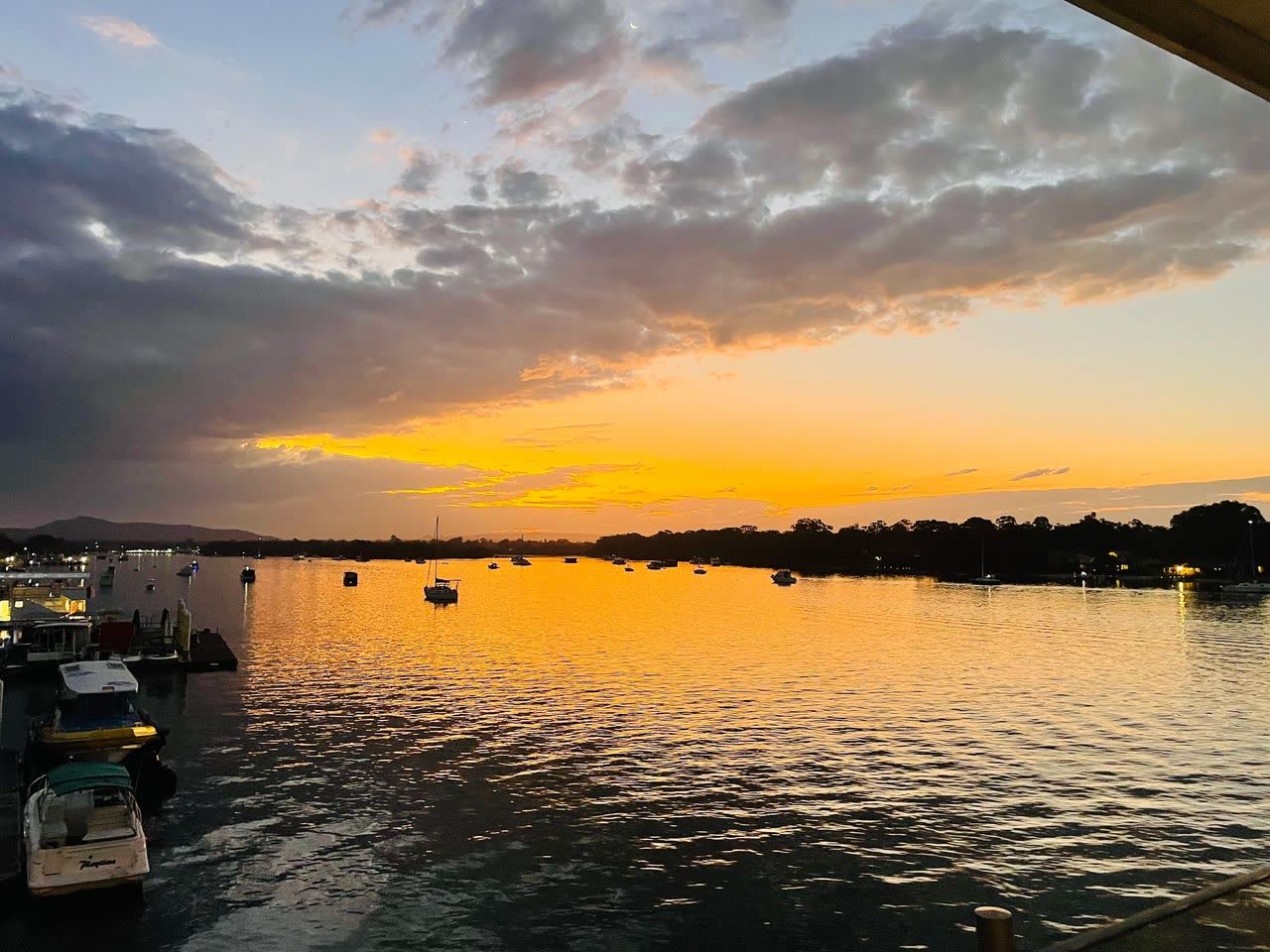
Noosaville Property Market: A Buyers Agent's Guide
Noosaville riverside suburb profile 2026: market data, lifestyle anchors, and Vendee's Noosa Shire forensic acquisition discipline.

Tewantin Property Market: A Buyers Agent's Guide
Tewantin suburb profile, 2026 market data, and Noosa Shire forensic acquisition discipline. Riverside village, marina precinct, Mt Tinbeerwa...
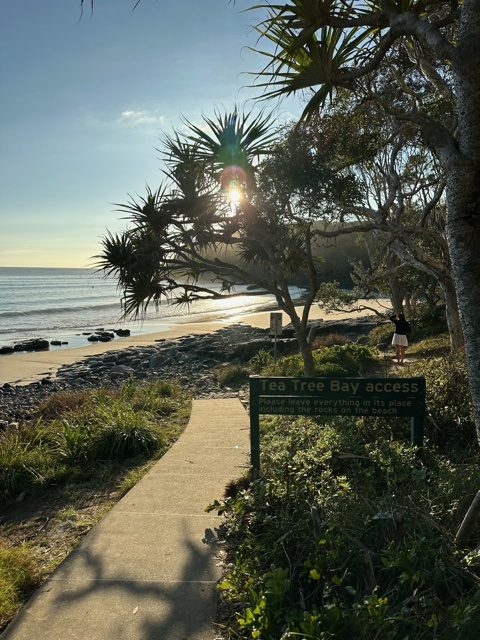
Buying Property in Noosa: The Definitive 2026 Buyers Guide
Buying property in Noosa 2026: Noosa Shire LGA vs Sunshine Coast, suburb price profiles, and the nine-step VEPAP forensic acquisition protoc...
Service Page
Noosa Buyers Agent →Direct service detail, area coverage, fee structure, and the full VEPAP nine-step protocol.
Schedule a Briefing
"If you're considering an acquisition in our markets, the briefing is the right first conversation."
Book a Briefing